

5 Things You Should Do With Your First Overseas Salary

03 Jun 2026
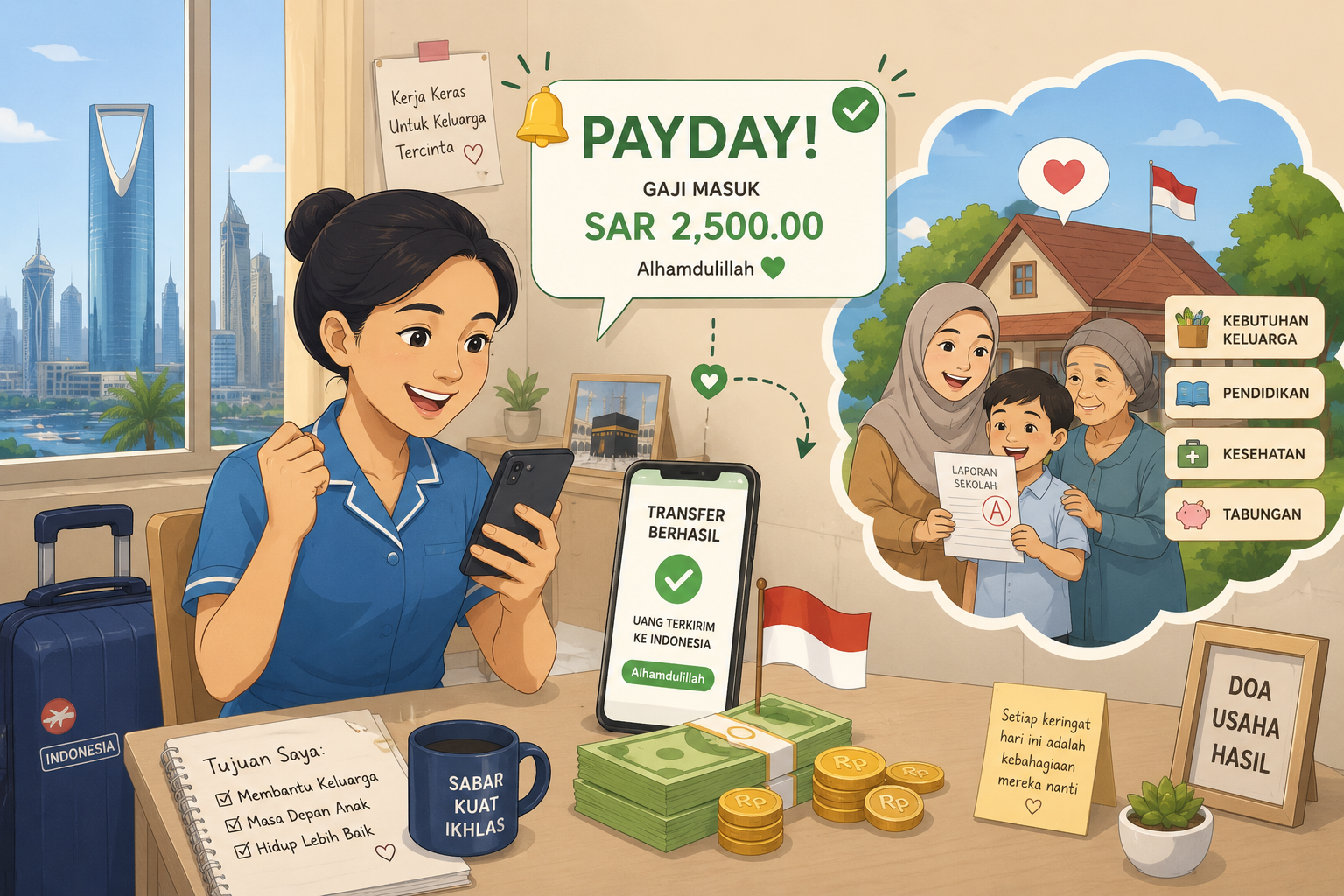
Your First Salary Is More Than Money
After weeks or months of waiting, you finally receive your first salary from working overseas.
Maybe your employer deposits it into your bank account. Maybe you receive it in cash. Either way, there is usually one thing on your mind:
“What should I do with it?”
For Indonesian migrant workers, the first salary often comes with many expectations. Your family may be waiting for a transfer, you may have your own needs to pay for, and you may already be thinking about buying something you have wanted for a long time.
But before the money starts disappearing, take a step back.
Your first salary can set the financial habits you carry throughout your time abroad.
Here are five smart things to do before you spend it.
1. Find Out How Much You Really Have
A foreign-currency salary can look much bigger when converted into rupiah.
But don’t let the number fool you.
Your salary still needs to cover your own expenses, which may include:
- food and daily needs
- accommodation
- transportation
- phone and internet
- insurance or other deductions
- existing debt or financial commitments
Before sending money home or making a large purchase, calculate your real available income.
Salary ≠ money available to spend.
Understanding this difference is the first step toward avoiding financial stress later.
2. Decide Your Remittance Amount Before Your Family Asks
For many PMI, sending money home is one of the biggest reasons for working overseas.
But how much should you send?
There is no single answer.
Instead, decide on an amount based on your actual salary, living costs, savings goals, and your family’s needs.
A simple approach is to divide your income into:
Family Support → regular household expenses
Savings → money for your future
Emergency Fund → unexpected situations
Personal Spending → things you need or want
This way, you are supporting your family without accidentally sending away the money you need for yourself.
And remember: a sustainable remittance is better than a large transfer that leaves you struggling until the next salary.

3. Save Something Before You Start Spending
Here’s a simple rule worth remembering:
Save first. Spend later.
Don’t wait until the end of the month to see what is left.
By then, there may be nothing left.
Even a small amount from your first salary can become the beginning of an emergency fund. That money can help if your salary is delayed, an unexpected expense appears, or you need financial support during a difficult period.
Your savings can eventually help fund bigger goals too:
- returning home
- starting a business
- buying a house
- supporting your children’s education
- preparing for retirement
You do not need to start with a huge amount.
The important part is building the habit.
4. Enjoy Your First Salary — But Don’t Let It Disappear
Let’s be realistic.
You worked hard for this money.
It is perfectly reasonable to celebrate.
Maybe you want to buy something for yourself, send a special gift home, or have a nice meal with friends.
Go ahead — but give yourself a limit.
The danger is when one celebration turns into a spending habit.
Before a large purchase, ask yourself:
“Will I still be happy I bought this three months from now?”
If it fits within your budget, enjoy it.
But if the purchase means using your emergency savings or borrowing money later, it may be worth waiting.
Celebrate the achievement without spending away the opportunity.
5. Give Your Overseas Salary a Bigger Purpose
Your first salary is important because it can remind you why you decided to work abroad in the first place.
Perhaps your goal is to:
Pay for your child’s education.
Help your parents.
Build a house.
Start a small business.
Save enough to return to Indonesia.
Become financially independent.
Write your goal down.
Then give your future salaries a destination.
Instead of thinking:
“I need to survive until my next salary.”
Start thinking:
“Every salary is helping me get closer to something.”
That small change in mindset can completely change how you manage your money.
A Simple First-Salary Formula
You don’t need a complicated financial system.
Try this:
Receive → Separate → Save → Send → Spend
Receive: Know exactly how much you have.
Separate: Divide it according to your priorities.
Save: Put aside money for emergencies and future goals.
Send: Transfer the amount planned for your family.
Spend: Use the remaining money for your personal needs and enjoyment.
The percentages can be different for every worker.
The important thing is to make the plan before the money disappears.
What If Your First Salary Is Not Enough?
Sometimes the first salary may be lower than expected, or an unexpected expense may arrive at the wrong time.
Before immediately borrowing money, stop and ask:
- Is this expense urgent?
- Can I wait until the next salary?
- Do I already have emergency savings?
- How much do I actually need?
- Can I realistically repay the financing?
If you genuinely need additional financial support, choose a legitimate provider, understand the total repayment and fees, and make sure the repayment fits your income.
You can learn more about EzyCash’s lending services and review the applicable terms before making a decision.
Borrowing should be a planned financial decision — not a panic reaction to an empty wallet.
Don’t Let Your First Salary Become Your Last Lesson
Your first salary abroad may not be your biggest salary.
You may earn more later. Your responsibilities may change. Your financial goals may become bigger.
But the habits you build now can stay with you.
If your first salary teaches you to budget, save, support your family responsibly, and plan for the future, every salary after that becomes easier to manage.
Conclusion: Make Your First Salary Count
Your first salary abroad represents more than money.
It represents the result of leaving home, adapting to a new environment, and working hard for a better future.
So before spending it all, pause.
Support your family. Save for yourself. Enjoy a little. And give the rest of your money a purpose.
Because the most important question is not:
“What can I buy with my first salary?”
It is:
“What can my first salary help me build?”