

How Much Might an Indonesian Migrant Worker Spend When a Family Member Passes Away?

02 Sep 2026
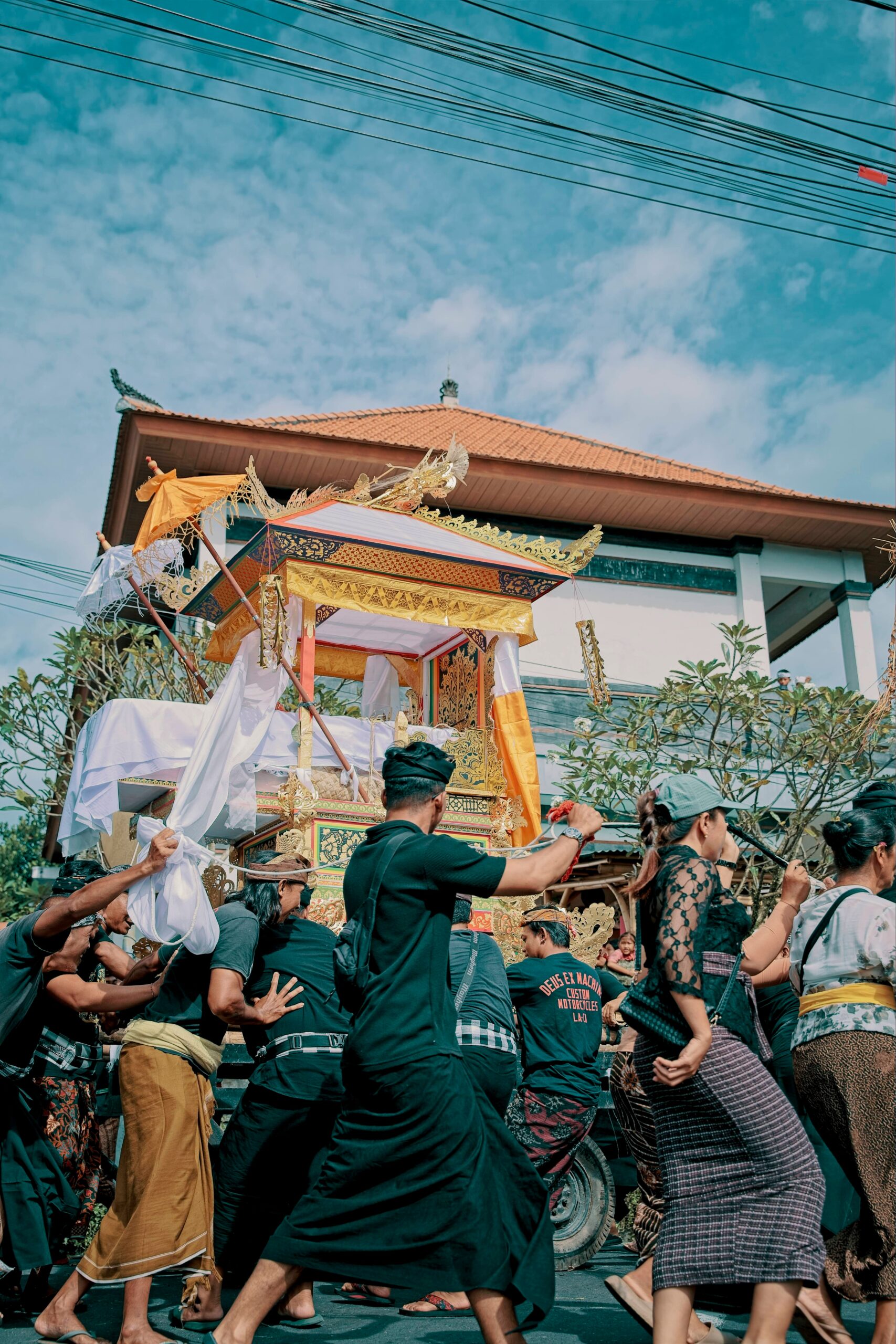
When Grief Comes With an Unexpected Bill
Imagine you are working overseas when your family calls with heartbreaking news:
“Someone at home has passed away.”
Your first concern is naturally your family. But very quickly, practical questions begin to appear.
Who will arrange the funeral?
Do you need to return to Indonesia?
How much money does the family need immediately?
And what happens if there is simply not enough money available?
For a migrant worker with a modest overseas salary, an unexpected family death can create a serious financial burden. Funeral expenses may arrive within days, while your normal expenses and monthly remittance obligations are still continuing.
The good news is that a family does not always need an expensive funeral. There are lower-cost options, community support, and in some locations, government or charitable assistance that may reduce the burden.
How Much Could a Simple Funeral Cost?
There is no single funeral price across Indonesia. Costs depend on the location, religion, family customs, whether a grave is already available, transportation distance, and the services the family chooses.
For a simple, modest arrangement, it can be useful to think in terms of roughly Rp4–8 million.
A family trying to keep costs low might have expenses such as:
| Possible expense
|
Lower-cost planning range |
| Peti/keranda, where required | Rp1–2.5 million |
| Local transport
|
Rp300k–1 million |
| Funeral preparation
|
Rp300k–750k |
| Grave-related expenses | Rp0–1 million |
| Food & drinks | Rp750k–1.5 million |
| Tent/chairs/basic arrangements | Rp300k–750k |
| Tahlilan/selamatan | Rp500k–1 million |
| Other small expenses | Rp500k–1 million |
Important: these amounts are only rough budgeting examples. Some of these costs may be zero or much lower when the community, public facilities, religious group, or local government provides assistance.
Why the Funeral May Cost More Than Expected
The burial itself is only part of the expense.
Families may also spend on:
Transport
If the funeral location is far from the home or family needs to collect the deceased from another city, transportation can become a significant expense.
Food for Relatives and Neighbours
In many Indonesian communities, family members may prepare food and drinks for people who come to offer condolences.
Tahlilan or Selamatan
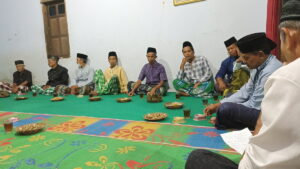
For many Muslim families, gatherings such as tahlilan or selamatan may take place after the death. The exact practice varies by family and community.
This does not have to be expensive. Families can keep it simple, prepare food themselves, limit the scale, or ask relatives and neighbours to contribute.
Equipment
Depending on the local community, families may need to arrange tents, chairs, lighting, sound equipment, or other basic items.
What If the Family Cannot Afford Even Rp4 Million?
This is an important question that many financial articles ignore.
Do not immediately assume that the family must take a loan.
There may be other options.
1. Ask the Local Village or City Government
The first place to check is often the desa/kelurahan or local Dinas Sosial.
Support differs by location, but some local governments provide free or subsidised burial services for residents who are unable to pay.
For example, in March 2026, Jakarta announced free funeral services at 82 public cemeteries (TPU) for eligible residents.
Pemprov DKI Jakarta: Layanan Pemakaman Gratis di 82 TPU
This means families should ask first before paying for private services.
2. Check BAZNAS or Local Religious Organisations
Some poor families may qualify for assistance from BAZNAS or local zakat organisations.
For example, BAZNAS Barru reported in September 2025 that its funeral-assistance programme provided Rp1.5 million for eligible fakir families and Rp1 million for eligible poor families.
BAZNAS Barru: Bantuan Pemakaman Mustahik
The important point is that such assistance is local and eligibility-based, so families should check their own area’s BAZNAS or zakat institution.
3. Ask the Community
In many Indonesian villages and neighbourhoods, the community can be an important source of practical help.
Instead of asking for a large amount of money from one person, families may receive smaller contributions from:
- relatives
- neighbours
- mosque or church communities
- village organisations
- local social groups
People may also contribute services instead of cash — for example, helping with transport, preparing food, digging the grave, or providing chairs.
Community support can significantly reduce the amount of cash a family needs.
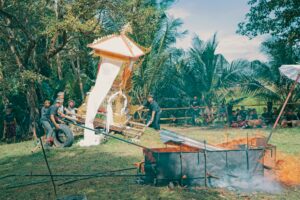
A Lower-Cost Funeral Can Still Be Respectful
Some families feel pressured to spend more because they worry that a simple funeral will look disrespectful.
It does not have to be that way.
When money is limited, consider:
Use the local public cemetery if available.
Ask whether the community can provide a burial plot or equipment.
Use simple food rather than catering.
Borrow chairs and tents rather than renting them.
Ask relatives to help prepare food.
Keep memorial gatherings modest.
The purpose is to honour the person who passed away — not to create debt that the family will struggle to repay for months.
What If You Still Don’t Have Enough?
Sometimes the family has already reduced costs and looked for assistance, but there is still a financial gap.
This is where you should slow down rather than borrow from the first person who offers cash.
Before taking financing, ask:
- How much is actually needed?
- Can relatives contribute part of it?
- Can the expense be reduced further?
- Is there any assistance still available?
- Can I afford the repayment?
If financing is genuinely necessary, choose a legitimate and transparent provider and understand the total repayment before agreeing.
For an overseas worker who needs additional financial support for a genuine emergency, EzyCash can be explored, subject to eligibility and applicable terms.
The objective should be to bridge a short-term financial gap, not create a long-term debt problem.
Conclusion: You Cannot Prepare for the Loss, But You Can Prepare for the Cost
Losing a family member is already difficult enough. An unexpected financial burden should not make the situation even harder.
For Indonesian migrant workers, the most important lesson is not that every funeral costs millions of rupiah.
It is that there are different ways to reduce the cost before taking on debt.
Ask the local government, check Dinas Sosial, check insurance and BPJS protection where applicable, contact BAZNAS or local religious organisations or ask the community for help.
And if you still need financing, borrow only what you genuinely need and can realistically repay.
A simple funeral can still be meaningful.
You do not need to spend beyond your means to honour someone you love.